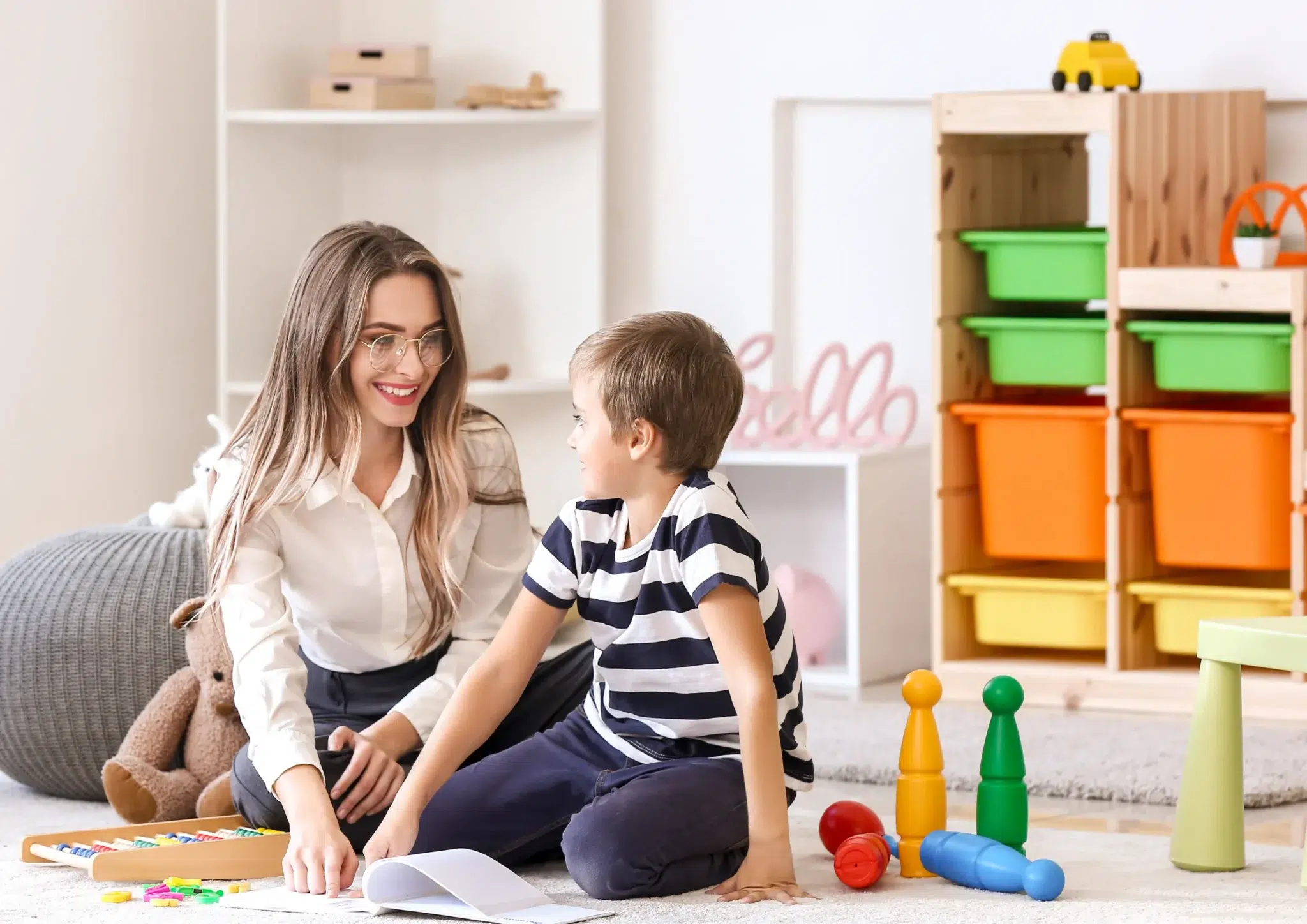
How Speech Therapy Supports Children with Hyperlexia
Traditional literacy instruction focuses heavily on teaching children how to decode written words. However, children with hyperlexia often already possess exceptional decoding skills. Instead, speech therapy shifts the focus toward helping children understand language, communicate flexibly and participate meaningfully in everyday interactions.
Rather than teaching children how to read, speech therapy focuses on helping them understand what words mean in real-life contexts.
Building Communication Through Visual Strengths
Many children with hyperlexia process visual information more effectively than spoken language. This means written supports can be valuable communication tools in therapy and daily life ⁴.
Speech therapy may incorporate:
- Written schedules
- Visual routines
- Social stories
- Written conversation scripts
- Choice boards
- Labels throughout the home or classroom
Using written language alongside spoken communication can reduce uncertainty, support understanding and build confidence while respecting the child’s natural learning style ⁴.
Developing Language Comprehension
Although decoding skills may be highly advanced, understanding vocabulary, abstract concepts and conversational language often requires additional support.
Speech therapy helps children learn to:
- Understand the meaning behind written and spoken language
- Answer questions appropriately
- Follow increasingly complex instructions
- Understand figurative language
- Develop flexible conversation skills
Activities connect written language with meaningful real-world experiences rather than focusing solely on reading accuracy.
Supporting Gestalt Language Processing
Many children with hyperlexia are also gestalt language processors. Instead of learning language one word at a time, they naturally acquire larger “chunks” of language from books, television shows, movies or familiar conversations ⁵.
Speech therapy supports this learning style by helping children gradually break larger scripts into smaller, flexible language units ⁵. Over time, children learn to combine words in new ways, allowing them to create original sentences while still honouring their natural language development process ⁵, ⁶.
Traditional Therapy Compared with Hyperlexia-Affirming Therapy
|
Traditional Language Therapy
|
Hyperlexia-Affirming Therapy
|
| Focuses on phonics and decoding |
Leverages existing decoding strengths |
| Primarily uses auditory instruction |
Integrates written supports alongside spoken language |
| Focuses on learning to read |
Focuses on understanding language |
| May discourage scripting |
Uses scripting as a foundation for communication |
| Targets weaknesses first |
Builds upon strengths while supporting communication goals |
A Collaborative Approach to Support
Speech therapy is often most effective when delivered as part of a multidisciplinary approach ⁶. Depending on each child’s needs, support may also involve occupational therapists, developmental paediatricians, psychologists, educators and families working together to create consistent communication opportunities across environments ², ³.
Parents and caregivers also play an important role by creating language-rich environments at home. Simple strategies such as labelling household items, using visual routines, sharing books and encouraging meaningful conversations can reinforce speech therapy goals throughout everyday activities ⁴.
Importantly, intervention should remain strengths-based. Rather than trying to reduce a child’s intense interest in letters or written language, neurodiversity-affirming speech therapy uses these interests to support communication, self-advocacy and participation in daily life ⁴.
Celebrating Strengths While Supporting Growth
Hyperlexia highlights the remarkable diversity of how children learn. Early reading abilities are not something that needs to be discouraged; they can become one of a child’s greatest strengths for developing communication and building meaningful connections.
Neurodiversity-affirming speech therapy recognises these exceptional literacy skills as valuable learning tools while supporting language comprehension, social communication and self-advocacy. By building on what children already do well, speech therapy creates opportunities for genuine participation and lifelong learning.
Every child with hyperlexia has a unique developmental profile. With personalised support, collaborative care and a strengths-based approach, children can continue developing communication skills while embracing the remarkable way they experience and understand the world.