ClickCease
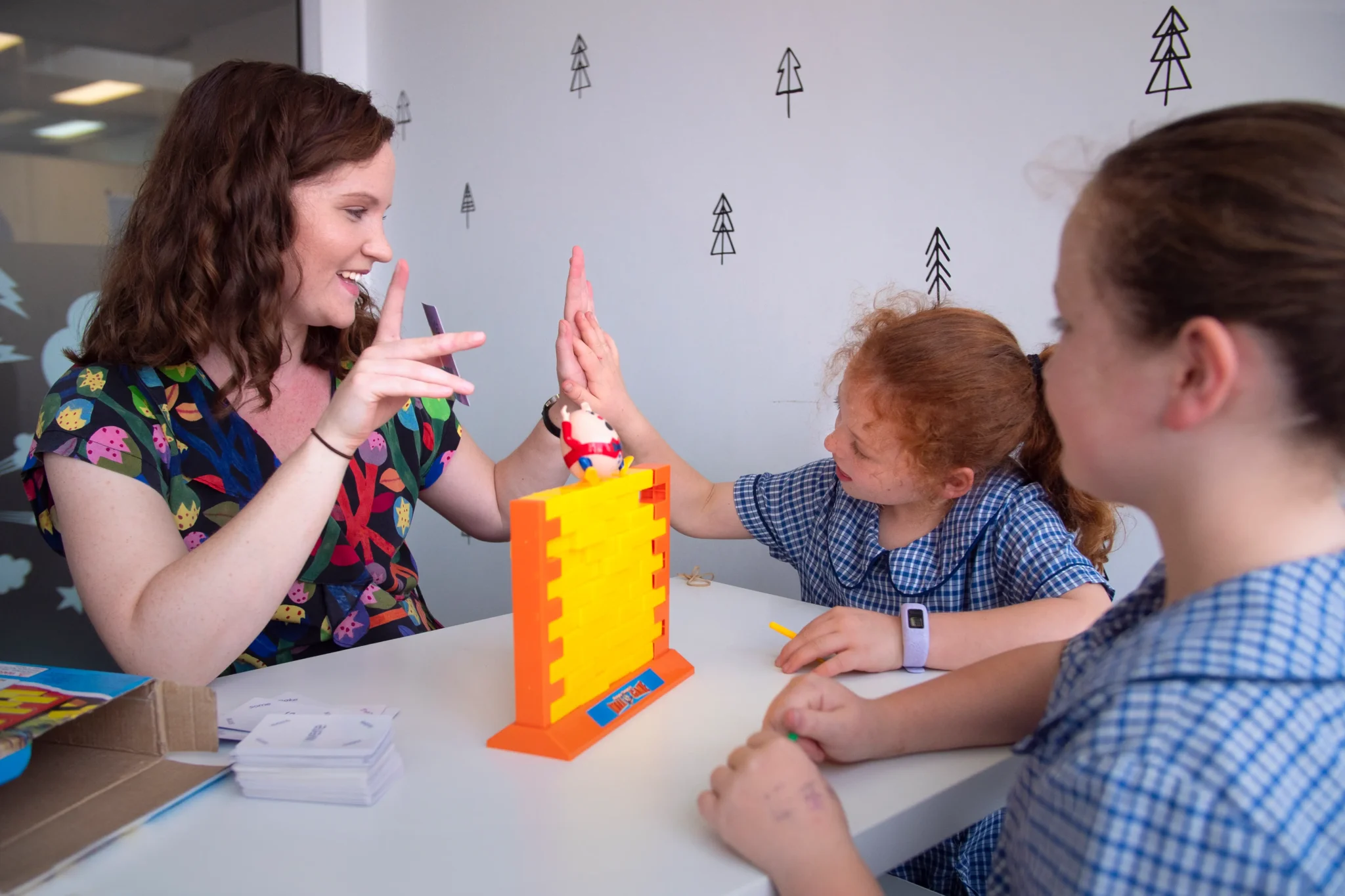
Speech pathologist using Keyword Sign and a high five to celebrate with two girls during a block wall game

Keyword Sign: How Speech Therapy Supports Your Child

Does your child communicate with their hands, their eyes or their whole body? If so, they are already communicating! Every way your child shares meaning matters. For many Australian families, KeyWord Sign can become another way to connect and be understood. However, it is also natural to have questions along the way. Will signing affect speech? How does sign language in speech therapy actually work? This guide will gently walk you through the basics, so you can feel informed and confident about your next steps.

What Is Keyword Sign?

KeyWord Sign (KWS) is a communication approach that adds hand signs to spoken words ¹. With KWS, you speak in full sentences and sign only the key words; that is, the most important words ³. For example, you might say “Time to go to the park” and sign “go” and “park”. Alongside the signs, you also use natural gestures, facial expressions and body language.

Here in Australia, KWS borrows its signs from Auslan, the native language of the Australian Deaf community ¹. It was previously known as Makaton Australia ². Today, the national organisation is part of Scope, and it offers training and resources across the country ³.

KWS can support children and adults of all ages ³. For instance, it may suit:

  • toddlers whose understanding is ahead of their spoken words
  • autistic children and teens
  • people with developmental or intellectual disability
  • children with hearing differences
  • adults whose communication has changed after an illness or injury

Keyword Sign, Auslan and Sign Language: What Is the Difference?

Auslan is a complete sign language, used by a whole community. It has its own grammar and word order, which differ from spoken English ². It also carries a rich culture and history. Therefore, Auslan deserves the same respect as any spoken language.

KWS, on the other hand, is not a language. Rather, it is a support that sits alongside spoken English and follows English word order ². Both use the same signs, so skills from one can carry over to the other. Even so, they serve different purposes. Your family might use one, the other, or both at different times. There is no single right path.

Will Key Word Sign Delay My Child’s Speech?

This is one of the most common worries parents share. Fortunately, the research is reassuring. There is no evidence that teaching a child to sign stops them from learning spoken language ². In fact, one research review looked at studies of alternative communication, including signing. None of the studies showed a drop in speech; rather, many showed gains ⁴. Similarly, researchers have described the idea that these tools block speech as a myth ⁵.

Instead, signs can ease frustration. When your child has a reliable way to share a need, the pressure lifts for everyone. You are also saying every word out loud as you sign. So, your child hears language and sees it at the same time.

In addition, there is no need to wait until a certain age or stage before introducing signs ⁵. Your child does not have to “earn” access to communication first.

Of course, speech is not the only goal. Some people will always prefer to sign, and that is completely valid. Their communication is whole just as it is.
Speech pathologist using Keyword Sign and a high five to celebrate with two girls during a block wall game

How Speech Therapy Supports Keyword Sign

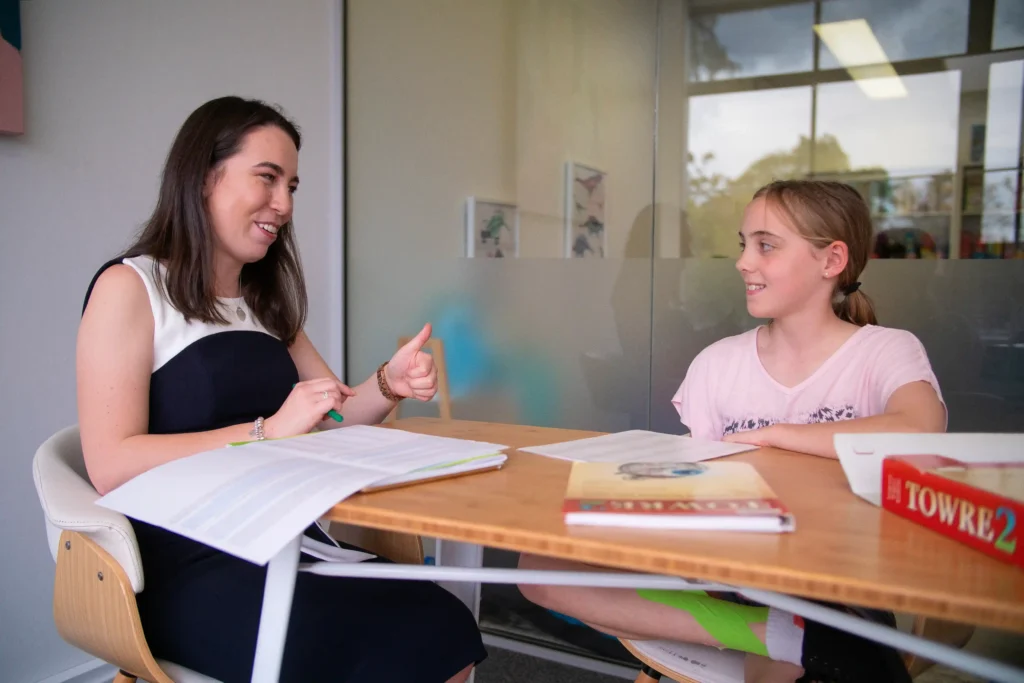
A speech pathologist looks at how your child currently communicates. Then, they build on their current strengths. The aim is not to change who your child is. Instead, it is to widen the ways they can connect with the people who matter to them. Signs, pictures, devices and speech can all be part of this work.

In speech therapy, your child might:

  • learn first signs for things they love, such as favourite foods, toys or people
  • practise signs during play, songs and daily routines
  • combine signs with pictures, devices or spoken words
  • build towards longer messages over time

Using several of these together is often called multimodal or total communication ².

In addition, a speech pathologist can support you as a parent. For example, you might learn which signs to start with and how to model them without pressure. You might also get ideas for sharing signs with grandparents, carers and educators. As a result, your child is exposed to consistent signing wherever they go.

Auslan, Culture and Your Child’s Identity

For many Deaf children, sign language is not a therapy tool at all. Rather, it is their language and their community. Auslan connects children with Deaf culture, role models and belonging. Because of this, your family’s language choices always come first. A speech pathologist can then work alongside those choices, rather than around them. Likewise, connecting with local Deaf organisations can open doors to playgroups, events and friendships for your whole family.

Simple Ways to Use KeyWord Sign at Home

You do not need to be fluent to begin. Here are a few gentle starting points:

  1. Start small. Choose three to five signs your child would find motivating.
  2. Sign and say. Say the whole sentence, and sign the key word.
  3. Follow their lead. Sign about what already interests your child.
  4. Keep it low pressure. Model signs without asking your child to copy.
  5. Celebrate every attempt. A close version of a sign still counts.

Also, remember that progress looks different for every child. Some children pick up signs quickly. Others watch for a long time first, and then surprise you. Both paths are okay. What matters most is that signing feels warm, playful and shared.

Frequently Asked Questions

Do I need to learn Auslan to use KWS?
No, you do not. You can start with a handful of key signs. Later, if you would like to learn more, Auslan classes are widely available.

Can my child use signs and a communication device together?
Yes. Many children switch between signs, pictures, devices and speech depending on the moment. Every mode is a valid way to communicate.

What if my child makes up their own signs?
That is still communication. First, honour the meaning behind it. Then, gently model the shared sign alongside it so others can understand too.

How long before my child signs back?
Every child is different. Some children use a sign within days, while others need many weeks of seeing it first. Watching and understanding are important parts of learning too.

Should the whole family learn signs?
Ideally, yes. The more people who sign with your child, the more useful signing becomes. Siblings often enjoy learning signs and they can become wonderful models.

Is KWS only for young children?
Not at all. Teenagers and adults use signs too, at school, at work and in the community. It is never too late to add signing to how someone communicates.

When to Talk With a Speech Pathologist

You might reach out if your child seems frustrated when they cannot get their message across. Similarly, you might reach out if you are unsure which signs or tools to start with. A speech pathologist can also help if your child already signs and you would like support across home, childcare and school. Finally, KeyWord Sign Australia runs workshops across the country, both in person and online ¹.

Above all, you know your child best. Your observations, questions and instincts are a valuable part of any support plan. So if something feels worth exploring, it is always okay to ask.

Final Thoughts on Keyword Sign

Every child deserves a way to be heard. For many families, signing can be that bridge. Whether your child uses KWS, Auslan, speech or a mix of all three, their communication is valid. With the right support, including sign language in speech therapy when it fits, you can build connection together, one sign at a time.

References:

  1. American Speech-Language-Hearing Association. (n.d.-a). Childhood apraxia of speech [Practice portal]. Retrieved August 18, 2026, from https://www.asha.org/practice-portal/clinical-topics/childhood-apraxia-of-speech/
  2. American Speech-Language-Hearing Association. (n.d.-b). Evidence-based practice (EBP). Retrieved August 18, 2026, from https://www.asha.org/research/ebp/
  3. American Speech-Language-Hearing Association. (n.d.-c). Orofacial myofunctional disorders [Practice portal]. Retrieved August 18, 2026, from https://www.asha.org/practice-portal/clinical-topics/orofacial-myofunctional-disorders/
  4. American Speech-Language-Hearing Association. (n.d.-d). Speech sound disorders: Articulation and phonology [Practice portal]. Retrieved August 18, 2026, from https://www.asha.org/practice-portal/clinical-topics/articulation-and-phonology/
  5. American Speech-Language-Hearing Association. (2022). Optimizing outcomes for children with phonological impairment: A systematic search and review of outcome and experience measures reported in intervention research. Language, Speech, and Hearing Services in Schools. https://pubs.asha.org/doi/10.1044/2022_LSHSS-21-00132
  6. Evidence base for oral motor treatment. (2019). The ASHA Leader. https://leader.pubs.asha.org/doi/10.1044/leader.IN6.24092019.8
  7. Homem, M. A., Veira-Andrade, R. G., Falci, S. G. M., Ramos-Jorge, M. L., & Marques, L. S. (2020). Orofacial myofunctional therapy and myofunctional devices used in speech pathology treatment: A systematic quantitative review of the literature. American Journal of Speech-Language Pathology. https://pubs.asha.org/doi/10.1044/2020_AJSLP-20-00245
  8. Sundberg, J., et al. (2025). Effectiveness of orofacial myofunctional therapy for speech sound disorders in children: A systematic review. International Journal of Orofacial Myology and Myofunctional Therapy, 51(1), 4. https://www.mdpi.com/2694-2526/51/1/4