Do you keep a baby book of ‘firsts’?
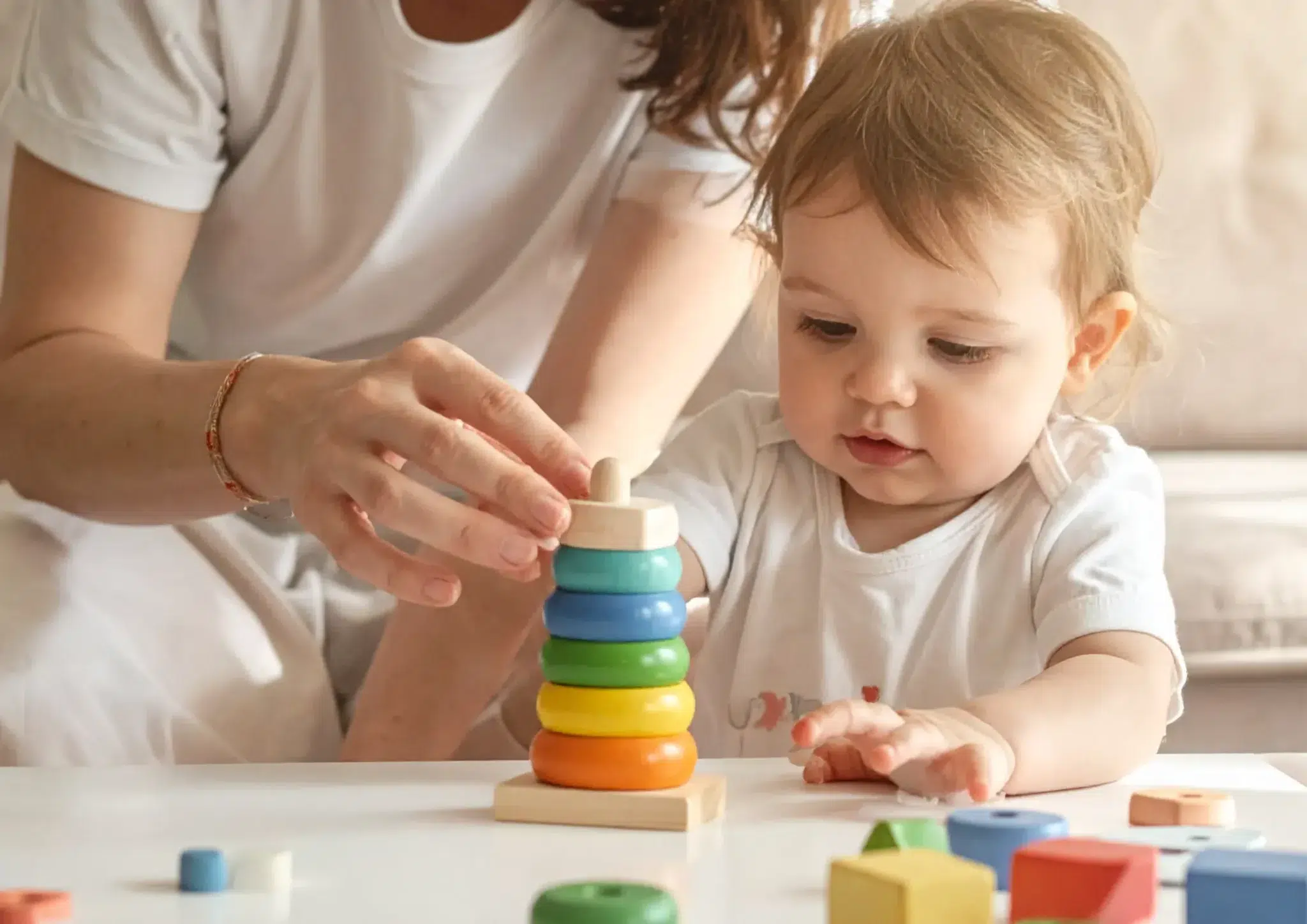
In the early months of parenting, marked by joyful chaos, chapped hands from nappy changes, and mountains of laundry—it’s hard to keep track of all the incredible moments: the first smile, the first roll, the first time they mash food into their mouth, the first time they giggle at the ocean ². Each first feels more amazing than the last!
As speech pathologists, our first questions to parents often focus on your child’s communication firsts: When did babbling begin? When was the first word? How many words did your baby have at 12 months, and at 18 months? ¹
These are powerfully important questions for us, as they are the clearest indicators of how your child is developing ³. For many parents, though, these subtle communication milestones often get lost among the others.
We are here to help you slow down, savor these moments, and give you the expert guide you need to understand and nurture your baby’s journey toward talking. Let’s talk about the specific baby speech milestones by age we are looking for in your child’s first 18 months.
Baby Speech Milestones: 0 to 18 Months Timeline
0-3 Months: The Listening Phase
In these earliest months, your baby’s most effective form of communication is, wonderfully, crying! Whimpers, snuffling, snorting, howling—they all mean different things. You are already an expert at decoding these sounds, which is the very first step in your child’s communication journey ¹.
Crucially, at this age, babies are also actively listening and absorbing the sounds, rhythms, and patterns of intonation within your words and conversations. They are building the foundation for speech long before they make their first sound ⁴.
4-6 Months: Playing with Sound
This is where the fun really begins! Your baby starts to play with sounds by moving their lips and touching their tongue to the front or back of their mouth ¹.
The true highlight here is the start of babbling, often combining strings of sounds such as ‘baba,’ ‘gaga,’ or ‘kakaka.’ These sounds don’t have meaning yet, but your baby loves the response they get from you ⁷.
How You Can Help:
- Mirror the Babbling: When your baby says ‘baba,’ enthusiastically say ‘baba’ back!
- Talk to Them: Narrate your day. “Mommy is folding a towel.” Being excited about their babbling helps them understand that communication is meaningful, encouraging even more exploration.
7-12 Months: Anticipating the First Word
At this age, strings of sounds go into hyper-drive! Patterns and intonations, along with gestures (like pointing and waving), make it sound like real conversation—even if you can’t understand the specific words ². It sounds like they are practicing for a grand debut!
The biggest milestone we look for is at around 12 months: the baby’s first word ³.
Seizing the First Word Opportunity:
It’s important to be super excited when they ‘talk‘ and help them shape their words ⁵,⁶. Seize every opportunity:
- If they say ‘ga’ or ‘ta’ and there is a toy car nearby, enthusiastically respond, “That’s right! That’s a car! The car is red!”
- Even if they weren’t meaning ‘car,’ you are making them feel like they succeeded while also modelling the correct pronunciation. You are gently turning their non-words into real words they can listen to and copy.
12-18 Months: Words Take Meaningful Shape
Now those strings of syllables really start shaping into meaningful words. It doesn’t matter if the words aren’t said perfectly (like ‘butterby’ for butterfly or ‘ongee’ for orange) ⁶. If they are being used consistently with meaning, we count them as words.
Your child will have some of the cutest ways of saying things, and it is important that you model correct speech by saying the word the right way. (Don’t worry—you can still create great memories by writing down their charming mispronunciations!)
When to Expect More:
By 18 months, we expect a rapid increase in vocabulary. The focus shifts from counting their first word to expanding their word count significantly ².