
ClickCease
Speech therapy session with a speech pathologist and an NDIS participant using sensory toys to support Sensory Motor Processing Disorder

Understanding Sensory Motor Processing Disorder: How Speech Therapy Can Help

If you’ve noticed a child who hates the sound of a hand dryer, refuses certain fabrics, or seems to crash into furniture on purpose, you’re not imagining things, and you’re certainly not alone. In many cases, these patterns point toward a sensory motor processing disorder: a difference in how the brain receives, organises, and responds to sensory information from the body and the environment. Although sensory motor processing disorder is often discussed purely in the context of occupational therapy, speech pathology also plays an important role, particularly when communication, feeding, or oral motor skills are involved. In this article, we’ll explore what sensory motor processing disorder actually looks like, how it can affect communication, and, most importantly, how a strengths-based approach to speech therapy can help.

What Is Sensory Motor Processing Disorder?

Sensory motor processing disorder describes difficulty integrating sensory input (touch, sound, sight, movement, proprioception, or body awareness, and the vestibular system, or balance) with an appropriate motor response. In other words, the brain receives the information just fine; the challenge lies in understanding and responding to it ³. For some people, this means being hypersensitive to certain textures, sounds, or movements. For others, meanwhile, it means being under-responsive, actively seeking out intense sensory experiences in order to feel regulated. Often, in fact, people experience a mix of both, depending on which sense is involved.

Historically speaking, this way of understanding sensory motor processing disorder traces back to occupational therapist A. Jean Ayres, PhD, who first proposed in the 1970s that the brain actually works with seven senses rather than the traditional five ⁴. Alongside touch, hearing, taste, smell, and sight, Dr. Ayres identified two additional “internal” senses: proprioception, which tells the brain where the body is in space, and the vestibular sense, which governs balance and movement. When these seven streams of information can’t be synthesised smoothly, the resulting experience has been likened to a kind of internal traffic jam, with conflicting signals arriving from every direction at once ⁴. Understood this way, sensory motor processing disorder isn’t a matter of a person overreacting on purpose; rather, it reflects a genuinely different neurological process for organising sensory information.

Sensory Motor Processing Disorder and Neurodivergence

Sensory motor processing disorder is not yet recognised as its own standalone diagnosis in every diagnostic manual, even though it is widely acknowledged clinically, with pediatricians and developmental specialists frequently the ones to identify it ¹. Indeed, there is ongoing debate within the medical community about how sensory motor processing disorder should be classified. On one hand, some clinicians view it as a distinct profile in its own right; on the other, some see it as one expression of a broader condition such as autism or ADHD, or simply part of the natural range of sensory sensitivity ³. Ultimately, though, what matters most for families isn’t the label; it’s recognising when sensory and motor differences are genuinely getting in the way of communication, learning, or daily participation, so that the right support can be put in place early.

Additionally, sensory motor processing disorder shows up across the neurodivergent community broadly, and are commonly associated with autism and ADHD; however, a substantial group of children experience significant sensory processing challenges without meeting the criteria for either diagnosis, which in turn means access to appropriate support can sometimes be harder to find for this group ².

Signs of Sensory Motor Processing Disorder

Sensory motor processing disorder can present differently from one person to the next, which is why it can be missed or misunderstood. It generally falls into two patterns, with many people experiencing a blend of both ³. These patterns may become noticeable during the toddler years through sensitivity to noise or light, clothing preferences, clumsiness, or difficulty with fine motor tasks ⁴.

  • Some children are over-responsive to sensory input.

    They may react strongly to textures, sounds, lights, or food textures, and may appear clumsy or avoid activities such as playground equipment or messy play. These responses can sometimes be mistaken for behaviour problems ³.

  • Some children are under-responsive or sensory-seeking.

    They may struggle to sit still, chew on clothing or objects, seek spinning or jumping, or have difficulty reading social cues and judging personal space ³.

  • For older children and teens

    , unrecognised sensory motor processing disorder may affect self-confidence or contribute to social withdrawal. Early and affirming identification can help ensure the right supports are provided without focusing on labels ³.

Sensory Motor Processing Disorder Across Ages

Sensory motor processing disorder can affect both children and adults. Many adults have experienced these sensory patterns since childhood, often developing coping strategies that may hide their difficulties from others ³.

Sensory motor processing disorder can also be mistaken for other behaviours. A child may be labelled “picky”, “impulsive”, “clumsy”, or “immature”, when these behaviours may actually reflect how their nervous system responds to sensory input ⁴.

Sensory Motor Processing Disorder and Communication

Speech and language don’t develop in isolation from the sensory and motor systems; rather, they depend on them. Producing speech and language relies on foundational processes such as integrating auditory and visual information, planning motor sequences, and having proprioceptive awareness of the body ¹. When sensory motor processing disorder disrupts any of these foundations, communication development can be affected in several distinct ways:

  1. Auditory processing challenges for example, can make it difficult to filter background noise from speech, discriminate between similar sounds, or attend consistently to spoken language.
  2. Oral sensory sensitivities, similarly, can affect willingness to try new foods, tolerate toothbrushing, or accept touch around the mouth and face, all of which relate closely to feeding and oral motor development.
  3. Motor planning difficulties (sometimes called dyspraxia), meanwhile, can make it harder to coordinate the rapid, precise movements of the lips, tongue, and jaw required for clear speech.
  4. Vestibular and proprioceptive differences, in addition, can affect a child’s ability to sit still, regulate arousal levels, and stay engaged during learning or social interaction, all of which indirectly support communication.
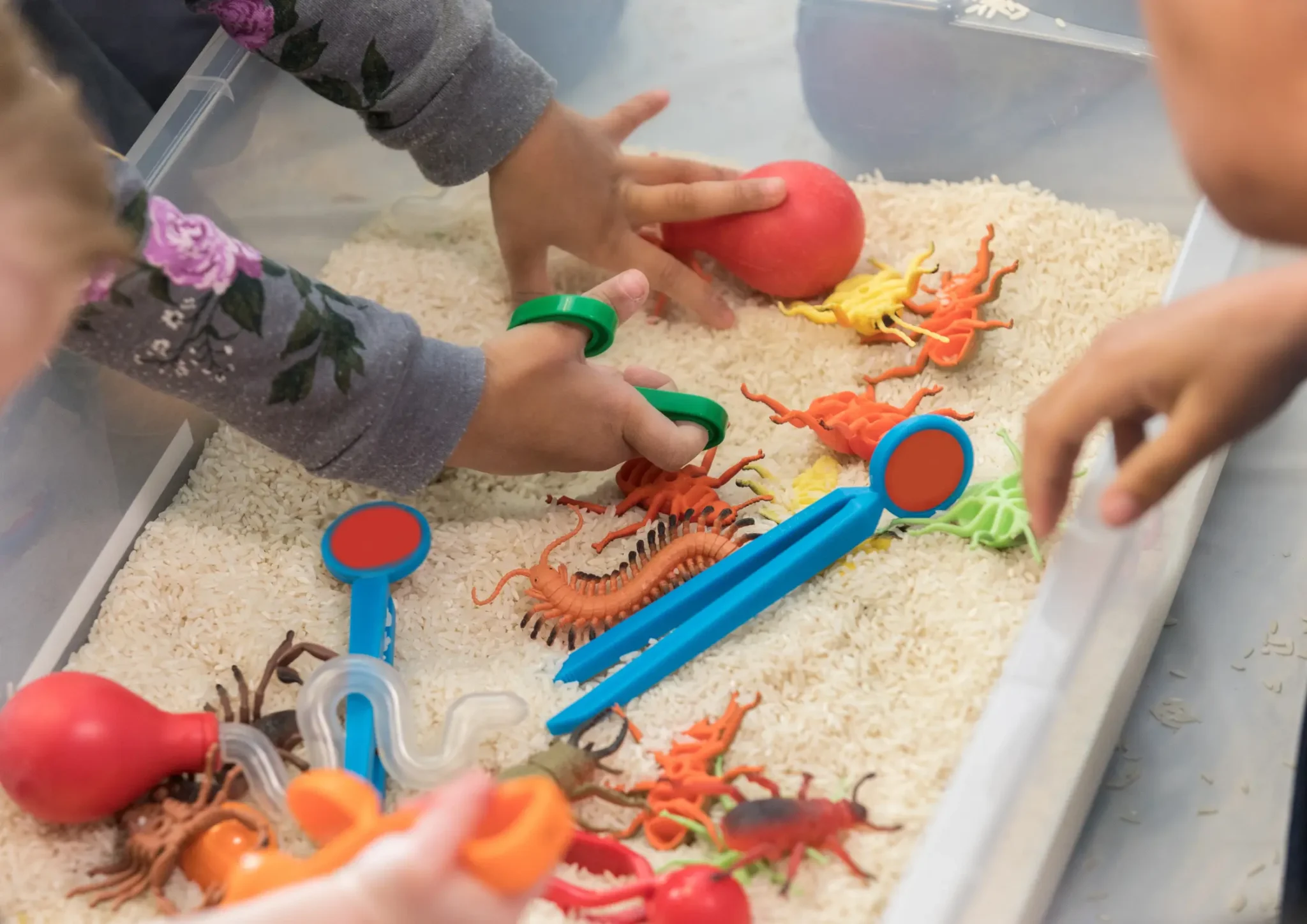
Child using hands to play with sensory toys in rice during speech therapy for Sensory Motor Processing Disorder

Speech Pathologist’s Role in Sensory Motor Processing Disorder

While occupational therapists typically lead the broader sensory integration approach, speech pathologists nonetheless bring specialised expertise to the pieces of sensory motor processing disorder that intersect directly with communication and feeding. To clarify, a speech pathologist won’t diagnose sensory motor processing disorder itself; even so, they play a central role in:

  1. Assessing how sensory differences affect communication: that is, identifying how auditory processing, oral sensitivity, or motor planning is contributing to speech, language, or feeding difficulties.
  2. Adapting therapy environments: for instance, reducing background noise, adjusting lighting, offering movement breaks, or using preferred sensory tools to help a person feel regulated enough to engage and learn.
  3. Supporting oral motor and feeding skills: specifically, working gently with children who are sensitive to textures, temperatures, or tastes, or who need extra support coordinating the muscles used for eating and speaking.
  4. Building motor planning for speech: namely, using structured, repetition-based approaches for children whose sensory motor processing disorder includes difficulty sequencing the movements needed for clear speech.
  5. Collaborating on regulation strategies: in other words, working alongside occupational therapists so that sensory regulation supports, such as fidget tools, weighted items, or movement breaks, are used consistently across therapy and home settings.

Sensory Motor Therapy Strategies

Given that every sensory motor processing disorder profile is unique, speech therapy is, understandably, never one-size-fits-all. That said, several strengths-based strategies are commonly woven into sessions:

  • Following the child’s regulation state. After all, therapy is most effective when a person feels calm and safe. Therefore, this might mean starting a session with movement, deep pressure, or quiet time before introducing communication tasks.
  • Multisensory teaching. Along the same lines, speech therapy for sensory motor processing disorder often incorporates visual, auditory, and tactile tools together, so that information is presented in the way each individual processes it best ⁵.
  • Graded exposure for feeding and oral motor work. Rather than pushing new textures or sensations too quickly, therapists instead introduce small, manageable steps that build tolerance and trust over time.
  • Predictable structure and visual supports. Since knowing what comes next can reduce anxiety, this approach frees up cognitive resources for communication, particularly for those who find unpredictability sensory-overwhelming.
  • Play-based, child-led sessions. For example, playtime is frequently used to build correct motor patterns for holding, exploring, and moving ⁶, thereby embedding therapy goals into activities that feel natural and enjoyable rather than clinical.
  • Reinforcing the sensory diet across settings. Many people with a sensory motor processing disorder, in addition, benefit from a “sensory diet”: a personalised, everyday schedule of movement breaks, fidget tools, or calming activities designed by an occupational therapist to support focus and regulation ³. Although speech pathologists don’t design this schedule themselves, weaving its strategies into speech sessions, for instance offering a movement break before a listening task, or allowing a fidget tool during conversation practice, helps a person arrive regulated and ready to communicate, thereby keeping support consistent across every part of their day.

Working Together: A Team Approach

Because sensory motor processing disorder touches so many areas of daily life, the most effective support, unsurprisingly, usually comes from a collaborative team. Speech pathologists, occupational therapists, pediatricians, educators, and, most importantly, families all bring valuable perspective to the table. After all, parents and caregivers are often the first to notice sensory patterns at home, and sharing this information helps the whole team build a more complete picture.

At Talkshop, moreover, we emphasise that supporting sensory motor processing disorder isn’t about eliminating sensory differences. Instead, it’s about helping each person build the communication tools and environmental support they need to participate fully in the parts of life that matter to them, whether that’s chatting with friends, enjoying mealtimes, or feeling confident in the classroom.

When to Seek Support

If you’ve noticed a child, or indeed an adult, who becomes overwhelmed by everyday sounds, avoids certain foods or textures, seems to crave constant movement, or is showing speech delays, language, or feeding alongside these patterns, then it may well be worth exploring whether a sensory motor processing disorder is part of the picture. Above all, early, affirming support can make a real difference, not by “fixing” sensory differences, but by building skills and confidence around them.

With that in mind, if this sounds familiar, Talkshop Speech Pathology offers a Free initial consultation to talk through what you’re noticing and explore whether our team can help. We’d love to hear from you, so please get in touch to start the conversation about the right support for your child or family member.

Reference

  1. Bilinguistics. (2025). Sensory processing disorder: Speech implications and resources. https://bilinguistics.com/sensory-processing-disorder-speech-implications-and-resources/
  2. National Center for Biotechnology Information. (n.d.). Multisensory audiovisual processing in children with a sensory processing disorder (II): Speech integration under noisy environmental conditions. https://pmc.ncbi.nlm.nih.gov/articles/PMC7381232/
  3. FamilyDoctor.org. (n.d.). Sensory processing disorder (SPD). https://familydoctor.org/condition/sensory-processing-disorder-spd/
  4. Child Mind Institute. (n.d.). Understanding sensory issues in children.
  5. BetterSpeech. (2023). What is sensory processing disorder & how to treat SPD? https://www.betterspeech.com/post/speech-therapy-for-sensory-processing-disorder
  6. Southern Pediatric Therapy Clinic. (2023). Sensory processing and motor disorders. https://southernpedtherapyclinic.com/sensory-processing-disorder/
  7. Cobblestone Speech. (n.d.). Sensory processing disorder. https://www.cobblestonespeech.com/sensory-processing-disorder.html