ClickCease
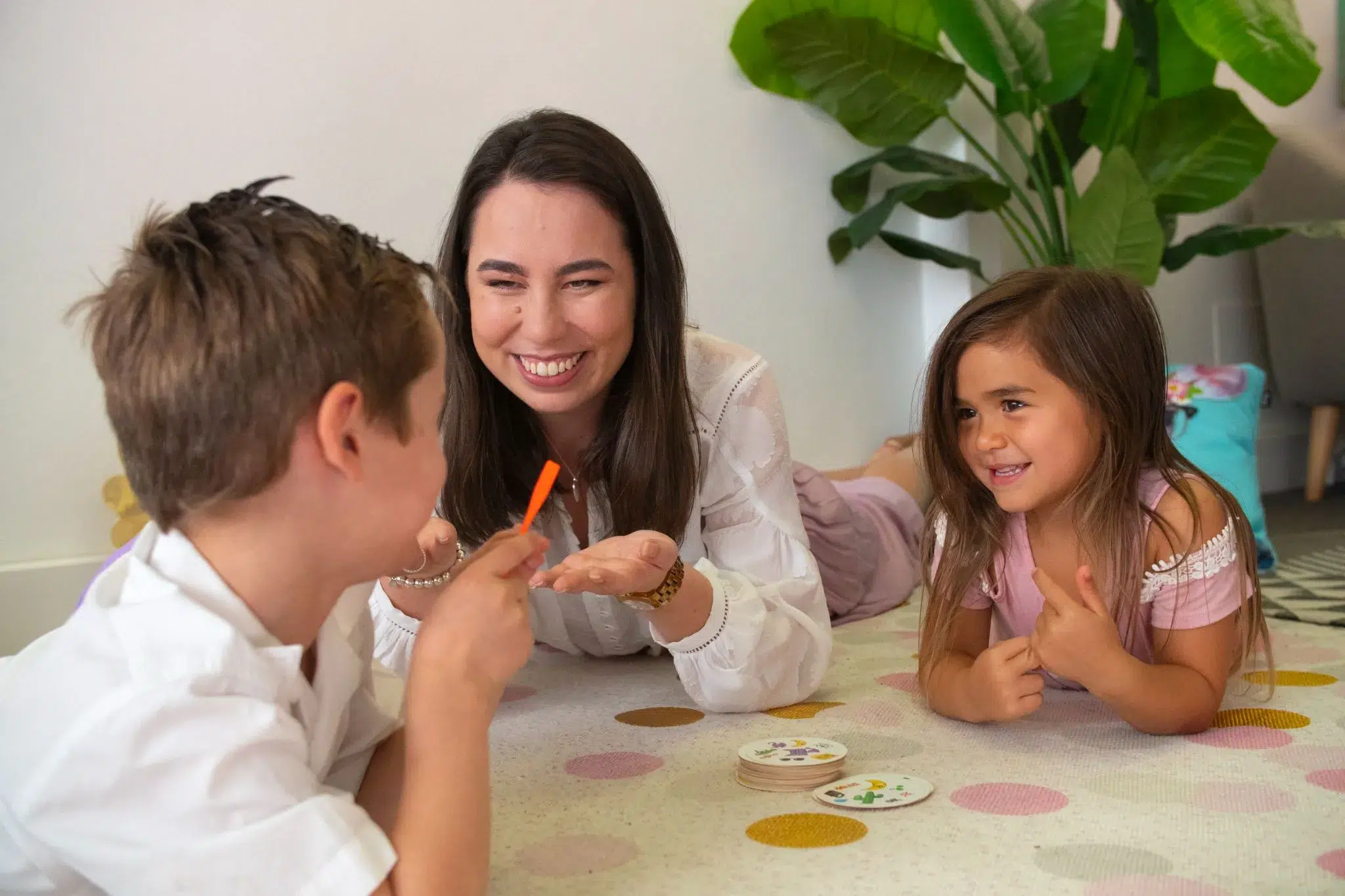
A young girl smiling and engaging in a play-based speech therapy session, used to assess and treat a articulation disorder.

Is My Child’s Speech Normal? Understanding Articulation Disorder

Many families find themselves questioning whether a child’s unique way of speaking is simply a developmental phase or if it points to something more, such as an articulation disorder¹. Understanding the nuances of speech sounds can empower parents and caregivers to provide the right support. This article explores speech sound development, identifying an articulation disorder², and how to support a child in a strengths-based way.

Is My Child Behind? Age-by-Age Speech Milestones:

Whilst every child is unique, there are general windows where certain sounds emerge. Below is a simplified guide to help families understand the developmental trajectory of speech, which can assist in deciding if there is a need to investigate a potential articulation disorder.

  • Age 2: Vowels are usually clear. Early consonants like /p/, /m/, /h/, /n/, /w/, and /b/ are typically present³.
  • Age 3: Sounds like /k/, /g/, /f/, /d/, /t/, and /ng/ (as in ‘sing’) should be emerging. By this age, a child should be understood by strangers about 75% of the time³.
  • Age 4: Sounds like /s/, /z/, /l/, /sh/, and /ch/ begin to stabilize.
  • Age 5-6: The trickier sounds, such as /r/ and /th/, are often the last to be mastered.

Whilst these are general guidelines, they serve as useful reference points for typical speech sound development. However, if a child is becoming visibly frustrated, withdrawing from social interactions, or if their speech remains unclear to unfamiliar listeners beyond the expected age milestones, it might be the right time to seek guidance.

The 4 Signs of Articulation Disorder: The “SODA” Method

If there is a concern that a child is experiencing an articulation disorder, speech pathologists often use the SODA acronym. This framework makes it incredibly easy to observe the specific patterns in a child’s speech².

Type of Error What it Means Parent-Friendly Example
Substitution Replacing one sound with another. Saying “wabbit” instead of “rabbit” (w for r).
Omission Leaving a sound out of a word. Saying “at” instead of “cat” or “oo” instead of “shoe.”
Distortion The sound is produced, but it sounds “off” or slushy. An “s” that sounds like a whistle or a lisp.
Addition Adding an extra sound that shouldn’t be there. Saying “puh-lay” instead of “play” (adding an extra vowel).

Articulation Disorder vs. Phonological Disorder: What’s the Difference?

Articulation and phonological disorders are both speech sound disorders, meaning they affect the production of speech sounds. An articulation disorder  occurs when a child has trouble coordinating the precise physical movements needed for clear speech, often involving the tongue, lips and palate (roof of mouth). A common example of an articulation disorder is an interdental lisp, where the tongue sticks out when producing the ‘s’ sound, making it sound like ‘th’ (e.g., sun sounds like thun).

A phonological disorder  involves the “rules” of a sound system. In this instance, a child can physically produce the sound, but they do not yet understand the “rules” for where that sound belongs in a word. Phonological patterns are predictable and consistent errors in a child’s speech. For example, a child may replace the ‘k’ sound with a ‘t’ sound (e.g., cat sounds like tat). 

A speech pathologist is able to differentiate between articulation and phonological disorders, and therefore provide the most appropriate support.
Many families find themselves questioning whether a child’s unique way of speaking is simply a developmental phase or if it points to something more, such as an articulation disorder¹. Understanding the nuances of speech sounds can empower parents and caregivers to provide the right support. This article explores speech sound development, identifying an articulation disorder², and how to support a child in a strengths-based way.


Is My Child Behind? Age-by-Age Speech Milestones:

Whilst every child is unique, there are general windows where certain sounds emerge. Below is a simplified guide to help families understand the developmental trajectory of speech, which can assist in deciding if there is a need to investigate a potential articulation disorder.

  • Age 2: Vowels are usually clear. Early consonants like /p/, /m/, /h/, /n/, /w/, and /b/ are typically present³.
  • Age 3: Sounds like /k/, /g/, /f/, /d/, /t/, and /ng/ (as in ‘sing’) should be emerging. By this age, a child should be understood by strangers about 75% of the time³.
  • Age 4: Sounds like /s/, /z/, /l/, /sh/, and /ch/ begin to stabilize.
  • Age 5-6: The trickier sounds, such as /r/ and /th/, are often the last to be mastered.

Whilst these are general guidelines, they serve as useful reference points for typical speech sound development. However, if a child is becoming visibly frustrated, withdrawing from social interactions, or if their speech remains unclear to unfamiliar listeners beyond the expected age milestones, it might be the right time to contact us.

The 4 Signs of Articulation Disorder: The “SODA” Method

If there is a concern that a child is experiencing an articulation disorder, speech pathologists often use the SODA acronym. This framework makes it incredibly easy to observe the specific patterns in a child’s speech².

Type of Error What it Means Parent-Friendly Example
Substitution Replacing one sound with another. Saying “wabbit” instead of “rabbit” (w for r).
Omission Leaving a sound out of a word. Saying “at” instead of “cat” or “oo” instead of “shoe.”
Distortion The sound is produced, but it sounds “off” or slushy. An “s” that sounds like a whistle or a lisp.
Addition Adding an extra sound that shouldn’t be there. Saying “puh-lay” instead of “play” (adding an extra vowel).

Articulation Disorder vs. Phonological Disorder: What’s the Difference?

Articulation and phonological disorders are both speech sound disorders, meaning they affect the production of speech sounds. An articulation disorder  occurs when a child has trouble coordinating the precise physical movements needed for clear speech, often involving the tongue, lips and palate (roof of mouth). A common example of an articulation disorder is an interdental lisp, where the tongue sticks out when producing the ‘s’ sound, making it sound like ‘th’ (e.g., sun sounds like thun).

A phonological disorder  involves the “rules” of a sound system. In this instance, a child can physically produce the sound, but they do not yet understand the “rules” for where that sound belongs in a word. Phonological patterns are predictable and consistent errors in a child’s speech. For example, a child may replace the ‘k’ sound with a ‘t’ sound (e.g., cat sounds like tat). 

A speech pathologist is able to differentiate between articulation and phonological disorders, and therefore provide the most appropriate support.

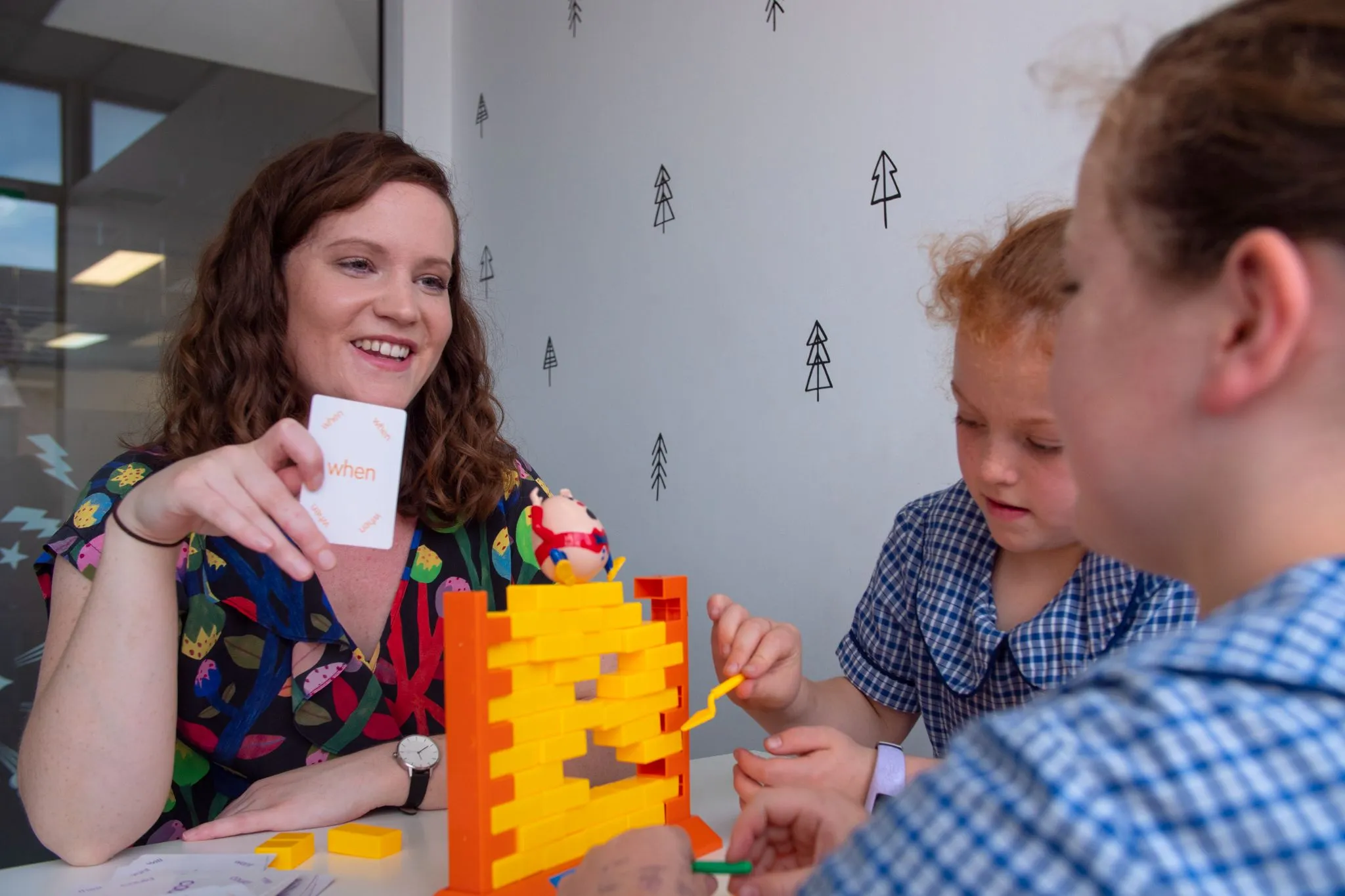
Two kids participating in a speech therapy activity involving matching cards, a common method for correcting sound errors associated with an articulation disorder.

Understanding the Causes of an Articulation Disorder

In many cases, the cause of an articulation disorder is unknown; these are referred to as “idiopathic”. Organic articulation disorders have a clear cause, such as neurological differences, structural abnormalities (like a cleft lip or palate), or even hearing loss from frequent ear infections³. Additionally, it is important to note that hearing tests are a standard first step in any evaluation. By ruling out hearing issues, professionals ensure that a child is receiving the correct support for their specific needs, thereby preventing the difficulty from becoming a long-term barrier to learning or social interaction.

5 Simple Games to Support Articulation Disorder at Home

Fortunately, it is not necessary to turn a living room into a clinical setting to support a child’s speech growth. Families can encourage development through play! Here are five fun ways to navigate an articulation disorder at home:

  1. The Mirror Game: Sit in front of a mirror together. Make silly faces, stretch the lips, and “show” the child where the tongue goes to make specific sounds. This visual feedback is incredibly powerful.
  2. Sound Detective: While reading a book, “hunt” for a specific sound. For instance, if the focus is on the “s” sound, excitedly shout, “I found an ‘s’! Snake! Sun! Spoon!”
  3. The Recast Technique: If a child says, “Look at the tat,” simply reply, “Yes, look at the cat! It’s a fluffy cat.” By gently repeating the word correctly without forcing them to say it again, adults provide a perfect, natural model².
  4. Puppet Play: Sometimes, children feel less pressure to “perform” when they speak through a puppet. Let the puppet make the funny sound, and see if the child wants to help the puppet say it better.

Moreover, these activities foster connection, which serves as the foundation for all effective communication.

How to Navigate Getting Help for an Articulation Disorder in Australia

If the decision has been made to seek professional support for a suspected articulation disorder, Australia offers several pathways to receive care.

Firstly, start with a General Practitioner (GP). They can determine if a child is eligible for a Chronic Disease Management Plan  (formerly known as an EPC), which provides a Medicare rebate for a limited number of allied health sessions per year.

Once a referral is obtained or a funding pathway is determined, it is important to find the right therapeutic fit. Talkshop Speech Pathology offers specialised assessments and therapy designed to meet a child where they are. Whether utilizing a GP referral or NDIS funding , reaching out to our Talkshop team is a proactive step toward connecting with professionals who understand how to navigate these systems and provide compassionate, evidence-based care.

Frequently Asked Questions (FAQ)

Q: Will my child just grow out of an articulation disorder? A: Many children do naturally develop their speech sounds as they mature. However, if a child is frustrated or struggling to be understood by peers, waiting may not be the most supportive option. A professional assessment  can help families decide on the best course of action.

Q: Is it my fault that my child has an articulation disorder? A: Absolutely not! Speech development is complex and often influenced by factors entirely beyond parental control². Ongoing support is the most important factor in a child’s success.

Q: How long does therapy usually take? A: This varies widely depending on the child’s age, the specific sounds they are working on, and their engagement level². Furthermore, consistent home practice is essential to speeding up the process.

Q: Does having an articulation disorder mean my child will have other learning difficulties? A: While there is some overlap between speech sounds and literacy, having an articulation disorder does not necessarily mean a child will struggle at school. Phonological disorders are closely linked to later language and literacy difficulties because they affect the sound system, which can impact learning to read and spell. However, with the right support, most children go on to become confident, effective communicators.

If you have concerns about your child’s speech, it is definitely worth investigating further. Early intervention is essential to ensuring the best outcomes for your child. We also offer a free initial consultation to discuss your concerns, answer questions, and help guide you through the next steps. Support is available, and you don’t have to navigate it alone.

References

  1.  American Speech-Language-Hearing Association. (n.d.). Speech Sound Disorders: Articulation and Phonology. https://www.asha.org/practice-portal/clinical-topics/articulation-and-phonology/
  2. Cleveland Clinic. (2022, July 8). Articulation Disorder: What It Is, Types & Treatment. https://my.clevelandclinic.org/health/diseases/23454-articulation-disorder
  3. McLeod, S., & Baker, E. (2017). Children’s Speech: An Evidence-Based Approach to Assessment and Intervention. Pearson.
  4. Speech Pathology Australia. (n.d.). Find a Speech Pathologist. https://www.speechpathologyaustralia.org.au/
  5. Stanford Medicine Children’s Health. (n.d.). Speech Sound Disorders in Children. https://www.stanfordchildrens.org/en/topic/default?id=speech-sound-disorders-in-children-160-236