Seeking speech pathology for dyslexia is a vital step in supporting a child’s literacy journey and emotional well-being. Dyslexia is a specific language learning difference that affects the way the brain processes the written sounds of language ¹, typically resulting in difficulties with reading, writing and spelling. This impacts an individual’s ability to “decode” words (the process of mapping sounds to letters). While dyslexia is often associated with reading and spelling difficulties, it’s important to remember that people with dyslexia often demonstrate strengths in other areas, and have a unique way of seeing the world ⁴ .
At Talkshop Speech Pathology, our focus is on supporting clients with dyslexia by exploring the unique complexity of the brain through a neurodiversity-affirming lens. Rather than viewing dyslexia as something that needs to be “fixed,” it is viewed as an alternative way of processing information that often comes with incredible strengths in big-picture thinking, creativity, and complex problem-solving ⁴. For this reason, dyslexia often comes under the umbrella term of ‘neurodivergent’. Consequently, the goal in providing dyslexia speech therapy is to give each person the right tools and strategies for reading and spelling so they can navigate the world with confidence and pride.
Diagnosis and Common Signs
Dyslexia is generally diagnosed by a psychologist, usually following at least six months of intervention focused specifically on improving reading and spelling skills. The process of receiving a dyslexia diagnosis also involves ruling out any underlying conditions that may better explain reading and spelling difficulties.
Early support is often the most significant factor in long-term literacy success and emotional well-being ¹. While a formal diagnosis of dyslexia may not happen until later in school, a speech pathologist can identify signs of literacy difficulties from as early as preschool. No dyslexia diagnosis is required to start speech pathology.
Signs of dyslexia can look different depending on a child’s age and stage of development. In preschool years, signs are often subtle and show up in spoken language rather than reading itself, such as difficulty learning nursery rhymes or mixing up similar-sounding words. Once a child starts school and begins formal reading instruction, signs typically become more noticeable, such as slow, effortful reading, avoiding reading aloud, or spelling that doesn’t match a child’s verbal ability. Recognising these differences early means families and educators know what to look for at each stage, rather than waiting for difficulties to become entrenched.
Some early signs that may indicate literacy difficulties include:
- Difficulty with Rhyming: Struggling to identify or create words that share the same ending sounds
- Word-Finding Challenges: Forgetting the names of objects or places, or using vague words like “thingy” to describe familiar objects.
- Difficulties with sound-matching: Difficulties matching words to their starting/ending sounds
- Letter-Sound Association: Finding it difficult to map sounds to letters.
Starting speech pathology earlier can support families to begin implementing strategies before their child experiences significant academic frustration. Thus, the focus remains on building confidence and maintaining a positive relationship with learning from the very beginning.
Why Choose Speech Pathology to Support Your Child?
Dyslexia often involves specific differences in phonological processing, the ability to identify and manipulate the individual sounds in spoken words ³ . Because speech pathologists are experts in the “sound system” of language, we’re perfectly positioned to bridge the gap between speaking, hearing, and reading.
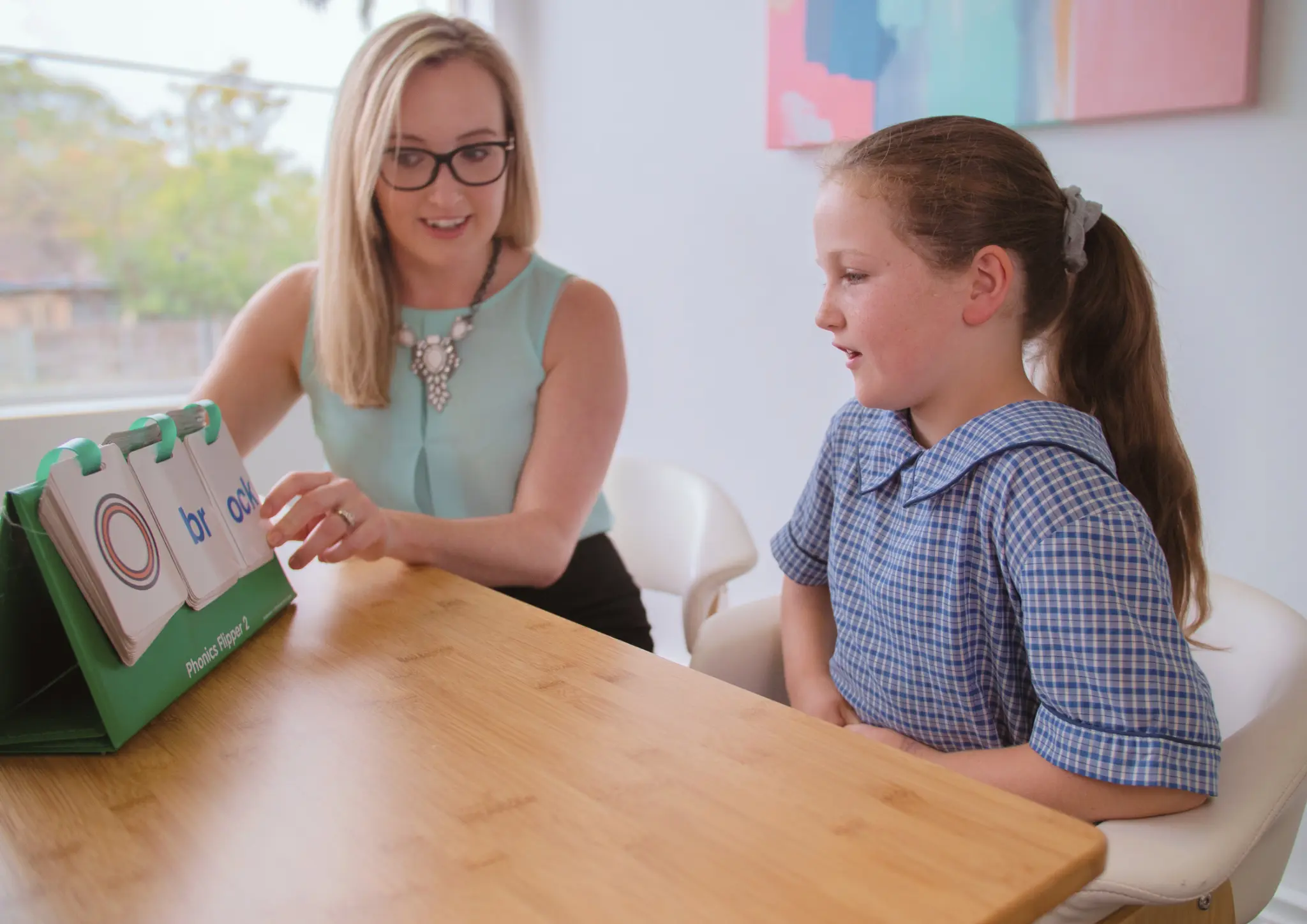
Speech pathology for dyslexia doesn’t rely on just one tool or strategy. Rather than focusing only on memorising sight words through repetition, sessions build skills from the ground up using evidence-based intervention grounded in the science of reading ². Clinicians explore how sounds (phonemes) map onto letters (graphemes), and how those connections form the basis of fluent reading — creating a unique “user manual” for each person.
The Core Components of Dyslexia
At Talkshop Speech Pathology, we investigate reading and spelling difficulties using two distinct pathways for literacy development.
- Lexical route: recognising letters and memorising known words (e.g., sight words)
- Non-lexical route: letter-sound knowledge and the ability to sound out unknown words
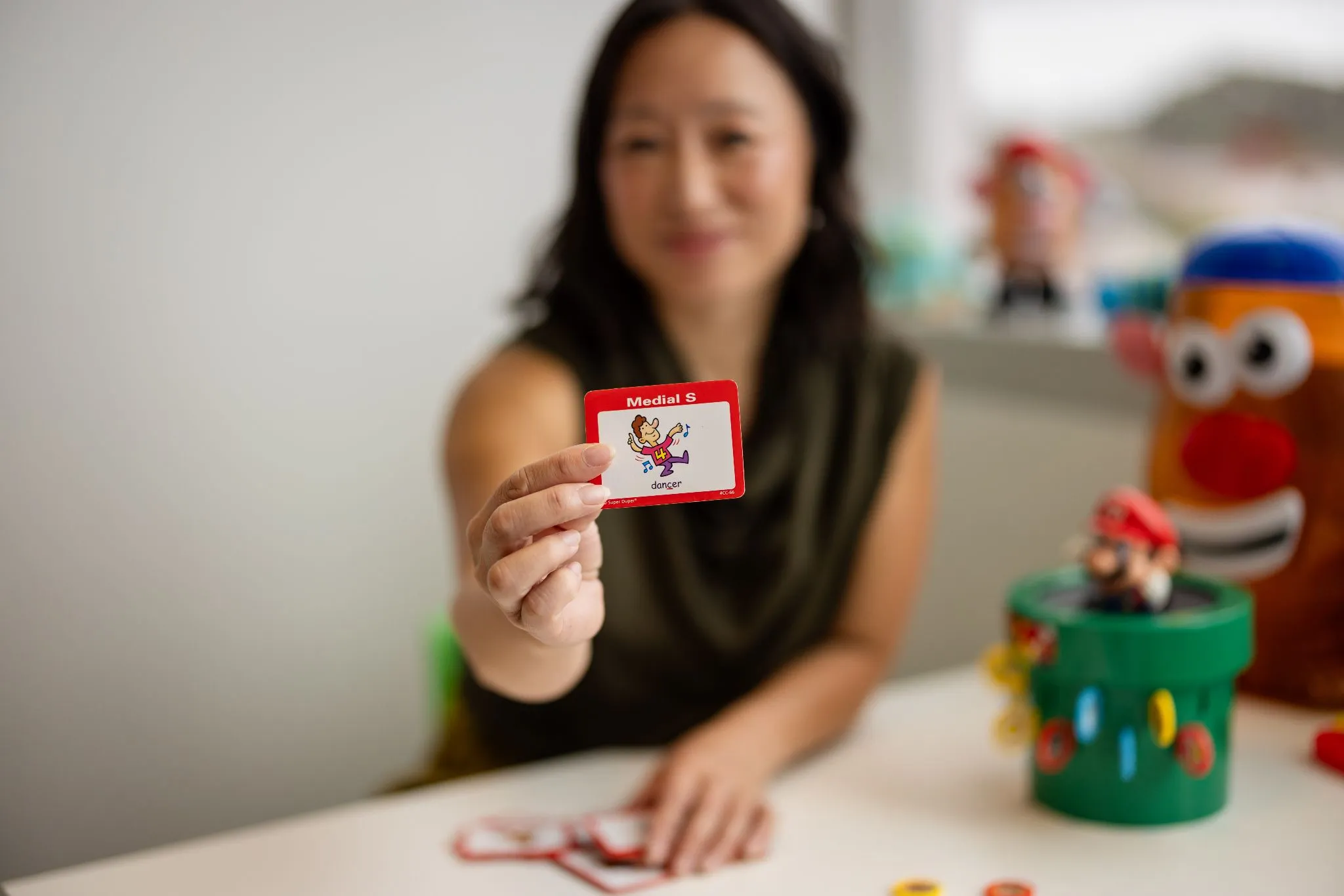
Difficulties occurring at the earlier, “foundational” stages of literacy development are more likely to impact later-developing skills. Dyslexia speech therapy sessions use evidence-based, multisensory techniques that engage various parts of the brain simultaneously ², tailored to the specific lexical or non-lexical skills that may benefit from extra support. This matters because neurodivergent learners often thrive when they can see, hear, and feel the language they’re learning — so sessions often incorporate tactile materials, physical movement, and visual aids to reinforce linguistic concepts.
Phonological Processing
Awareness of individual letter-sounds and the ability to blend, segment, and manipulate the sounds in words. This also extends into phonological memory (the ability to recall new words) and rapid-naming skills (the ability to efficiently recall phonological information from long-term memory) ³.
Morphology
Exploring the “units of meaning” within words, such as prefixes and suffixes, enabling people to decode longer and more complex vocabulary ⁵.
Syntax and Semantics
Analysing how sentences are constructed and how meaning is derived — both essential for reading comprehension and expression.