ClickCease
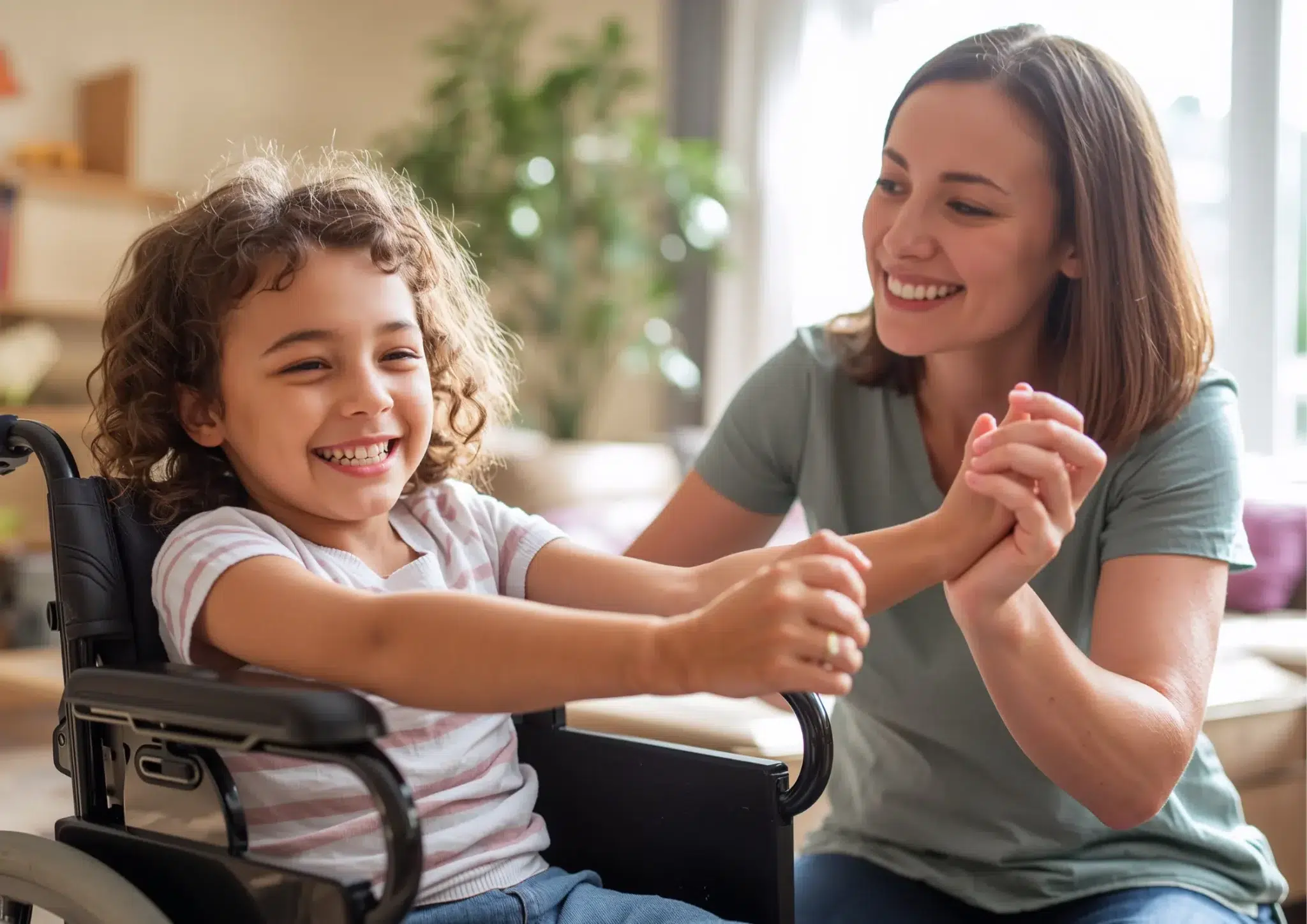
smiling speech pathologist providing personalised speech therapy to a child with cerebral palsy

Unlocking Independence: The Role of Speech Pathology for Cerebral Palsy

What is Cerebral Palsy?

Cerebral palsy (CP) is a lifelong physical disability that affects muscle control and body movement, and speech pathology for cerebral palsy plays a key role in supporting communication, feeding, and participation throughout life. It is the most common physical disability in childhood. The term cerebral refers to the brain, while palsy relates to difficulties with muscle control. Cerebral palsy is an umbrella term used to describe a group of conditions that affect movement, coordination, muscle tone, posture, and overall motor function ². It occurs when there is damage to, or atypical development of, the developing brain. This can happen during pregnancy, around the time of birth, or in early infancy ³. While cerebral palsy is permanent, it is not progressive, meaning the brain injury itself does not worsen over time. Symptoms may change as a child grows, but the underlying condition remains stable across their lifespan ².

People with cerebral palsy may experience a wide range of abilities and challenges. Some individuals can walk independently, while others require physical support or mobility aids . In addition to movement challenges, cerebral palsy can affect speech, communication, learning, vision, hearing, feeding, and swallowing ¹. Because each individual’s experience of cerebral palsy is unique, therapy and support must always be tailored to their needs.

Understanding Cerebral Palsy: Types and Symptoms

Cerebral palsy affects movement in different ways depending on the type of CP and which muscles are involved. There are four main categories of movement difficulties:

  1. Spastic cerebral palsy

    The most common type, characterised by stiff muscles and exaggerated reflexes. These children may have slow, effortful, or awkward movements, and speech can sound slurred or strained due to tightness in the facial and throat muscles .

  2. Dyskinetic (Athetoid) cerebral palsy

    Involves involuntary, uncontrolled movements that can affect the whole body, including the face and tongue. These movements make speech unpredictable and may also impact breathing, voice quality, feeding, and saliva control ².

  3. Ataxic cerebral palsy

    Affects balance and coordination. Movements may appear shaky or jerky, and speech can be monotone or breathy with unusual pauses. Swallowing difficulties are also common .

  4. Mixed cerebral palsy

    Some individuals experience a combination of the above types, leading to a unique set of movement and communication challenges ².

Symptoms of cerebral palsy vary widely. Children may have stiff or floppy muscles, unusual reflexes, involuntary movements, or difficulty with balance and coordination ¹. They may also experience challenges with sucking, chewing, swallowing, speech, or language development. Some children may have delayed growth, vision or hearing difficulties, intellectual disability, or epilepsy . While the specific symptoms differ for each child, cerebral palsy does not get worse over time, though muscle shortening or stiffness may increase if not treated ³.

Early identification of cerebral palsy is crucial. Symptoms often appear in the first two years of life ². Signs may include delays in reaching motor milestones such as sitting, crawling, walking, or speaking. Early assessment by healthcare professionals, including paediatricians and speech pathologists, can help families access the right interventions as soon as possible.

How Cerebral Palsy Affects Speech and Communication

Speech is movement. To talk, the brain must coordinate breathing, voice, lips, tongue, jaw, and timing. In cerebral palsy, brain injury affects how these movements are controlled, which can make speech sound different. Many children and adults with cerebral palsy experience spastic or mixed dysarthria, a motor speech disorder that can affect clarity, rate, rhythm, and volume  .

Common Movement Patterns and Their Impact on Speech

Tight, stiff movements (Spastic)

  • Muscles are rigid, movements slow and effortful

  • Speech may sound strained, slow, or harsh
    “The muscles want to work, but they’re stuck in overdrive.”

Wobbly, unsteady movements (Ataxic)

  • Movements lack accuracy; timing is off

  • Speech may be uneven, choppy, or sing-song
    “The muscles are moving, but not landing where they should.”

Uncontrolled, fluctuating movements (Dyskinetic)

  • Involuntary movements interfere with speech

  • Rate, loudness, and clarity vary widely
    “The message is there, but unwanted movements keep interrupting it.”

Mixed patterns

  • Many people show a combination of these patterns

  • Speech may change with fatigue, emotion, or environment

Why Understanding Movement Matters

Seeing speech as a form of movement helps families appreciate that differences in speech are natural and expected. It shifts the focus away from “what’s wrong” and toward understanding how the body communicates, making it easier to celebrate progress and support growth. This perspective guides speech therapy in a positive way, helping families confidently explore strategies, including augmentative and alternative communication (AAC) tools that empower children to express themselves fully and independently. Even simple gestures, key word signing, or picture boards can make a big difference in communication and confidence.

Children with cerebral palsy may also have delays in language development, including vocabulary, sentence structure, and word comprehension . Reduced opportunities for early social interaction due to movement challenges can further impact communication skills.

When communication is limited, children may experience frustration, reduced independence, or difficulty engaging in learning and social activities . Speech therapy addresses these challenges by improving the physical and cognitive aspects of communication while building confidence and independence.

Speech pathology for cerebral palsy through play-based interaction between a speech pathologist and a boy

How Speech Therapy Helps with Cerebral Palsy

Speech therapy plays an important role in supporting individuals with cerebral palsy across several key areas:

Improving speech clarity and intelligibility

Cerebral palsy is a movement disorder that can affect the fine control of muscles needed for speech. This means coordinating lips, tongue, jaw, and breath, managing timing, and producing sounds can be more challenging. It can also impact voice strength, pitch, and overall control, making it harder to speak clearly or be easily understood. Speech therapy helps strengthen these muscles, improve breath support, and enhance coordination, enabling individuals to communicate with clearer speech, a stronger and more controlled voice, and greater confidence .

Language and vocabulary development

Every individual has the potential to express their thoughts and ideas. Speech therapy encourages the growth of vocabulary, sentence formation, and linking words to objects or concepts, helping individuals share their needs, ideas, and feelings more confidently and independently .

Augmentative and Alternative Communication (AAC):

AAC provides additional ways to communicate for children whose speech is still developing or who communicate more reliably through other modes. This may include picture boards, communication books, tablets, or speech-generating devices. Gestures, key-word signing, and visual supports can also play an important role in helping children express themselves, make choices, and participate more fully in everyday life  .

Social communication skills

Individuals with cerebral palsy may face challenges in social communication due to differences in movement, speech, or language. Speech therapy supports individuals in taking turns, maintaining conversations, interpreting social cues, and repairing communication breakdowns. This helps them build friendships, participate confidently in social situations, and strengthen self-esteem .

Feeding and swallowing support

Feeding and swallowing are complex motor processes that rely on coordinated movement, timing, posture, and breathing. In children with cerebral palsy, these systems may work differently, influencing how food and fluids are managed. Speech pathologists assess feeding and swallowing by observing how a child eats and drinks across textures, positions, and everyday contexts. Assessment findings inform both swallowing management and feeding therapy, with strategies designed to support safe swallowing, adequate nutrition, efficiency, and positive participation in mealtimes .

Speech therapy goals are always individualised and focused on skills that make a meaningful difference in daily life .

Early Intervention and Developmental Stages

Early intervention is especially important for children with cerebral palsy, and early speech pathology for cerebral palsy can have a significant impact on long-term communication outcomes. The first three years of life are a critical period for brain development and learning ². For toddlers, speech therapy is often play-based and focuses on early sounds, first words, interaction, and feeding skills .

For school-aged children, therapy may target classroom participation, storytelling, social communication, literacy-related skills, and building confidence. Adolescents and adults may focus on independent communication, self-advocacy, education or employment goals, and community participation .

Speech therapy continues to be valuable at every stage of life, adapting to changing needs and priorities.

Telehealth Speech Therapy for Cerebral Palsy

Telehealth speech therapy for Cerebral Palsy has become an effective and accessible option for many individuals with cerebral palsy. Sessions can take place in familiar environments and focus on real-life communication within everyday routines. Telehealth is particularly helpful for families in remote areas, individuals with mobility challenges, or those seeking flexible therapy options .

Multidisciplinary Support

Speech therapy is most effective when combined with a multidisciplinary approach. This ensures that communication, feeding, movement, learning, and social participation are all addressed in a coordinated way. Speech pathologists collaborate with physiotherapists, occupational therapists, pediatricians, and educators to provide holistic care .

Talkshop Speech Pathology specialises in supporting individuals with cerebral palsy across the lifespan . Talkshop’s speech therapy is evidence-based, practical, and tailored to the unique needs of each child, with a focus on achieving real-world outcomes that enhance communication, independence, and quality of life. We offer both face-to-face and Telehealth services to provide flexibility and accessibility for every family, supporting speech clarity, language development, use of AAC, and feeding and swallowing needs, with the goal of empowering children and adults with cerebral palsy to reach their full potential.

Book Your FREE Initial Consultation Now

If your child or family member has cerebral palsy and you would like to explore how speech therapy can help, book an initial consultation with Talkshop Speech Pathology today. Our experienced speech pathologists will learn about your child’s needs, discuss therapy options, and develop an individualised speech therapy plan to support communication, feeding, and overall development.

Visit our website or call us today to schedule a consultation and take the first step towards improving communication and quality of life for your child.

References

  1. Rosenbaum, P., Paneth, N., Leviton, A., Goldstein, M., & Bax, M. (2007). A report: the definition and classification of cerebral palsy April 2006. Developmental Medicine & Child Neurology, 49(s109), 8–14. https://doi.org/10.1111/j.1469-8749.2007.tb12610.x
  2. Cerebral Palsy Alliance. (n.d.). What is cerebral palsy? Retrieved from https://www.cerebralpalsy.org.au
  3. Mayo Clinic. (2023). Cerebral palsy. Mayo Clinic Family Health Book. Retrieved from https://www.mayoclinic.org
  4. Novak, I., McIntyre, S., Morgan, C., Campbell, L., Dark, L., Morton, N., … & Goldsmith, S. (2013). A systematic review of interventions for children with cerebral palsy: state of the evidence. Developmental Medicine & Child Neurology, 55(10), 885–910.https://doi.org/10.1111/dmcn.12246
  5. American Speech-Language-Hearing Association (ASHA). (n.d.). Cerebral palsy and communication. Retrieved from https://www.asha.org/practice-portal/clinical-topics/cerebral-palsy
  6. Graham, H. K., Rosenbaum, P., Paneth, N., et al. (2016). Cerebral palsy. Nature Reviews Disease Primers, 2, 15082. https://doi.org/10.1038/nrdp.2015.82
  7. Talkshop Speech Pathology. (n.d.). Telehealth speech therapy for cerebral palsy. Retrieved from https://www.talkshop.com.au/services/telehealth-speech-pathology/
  8. Bjornson, K. F., Belza, B., Kartin, D., Logsdon, R., & McLaughlin, J. (2007). Children with cerebral palsy: participation and physical activity. https://pmc.ncbi.nlm.nih.gov/articles/PMC5759903/
  9. Swedish National CP Follow-Up Program. (2012). Speech problems in children with cerebral palsy. Retrieved from https://pubmed.ncbi.nlm.nih.gov/23186066/